
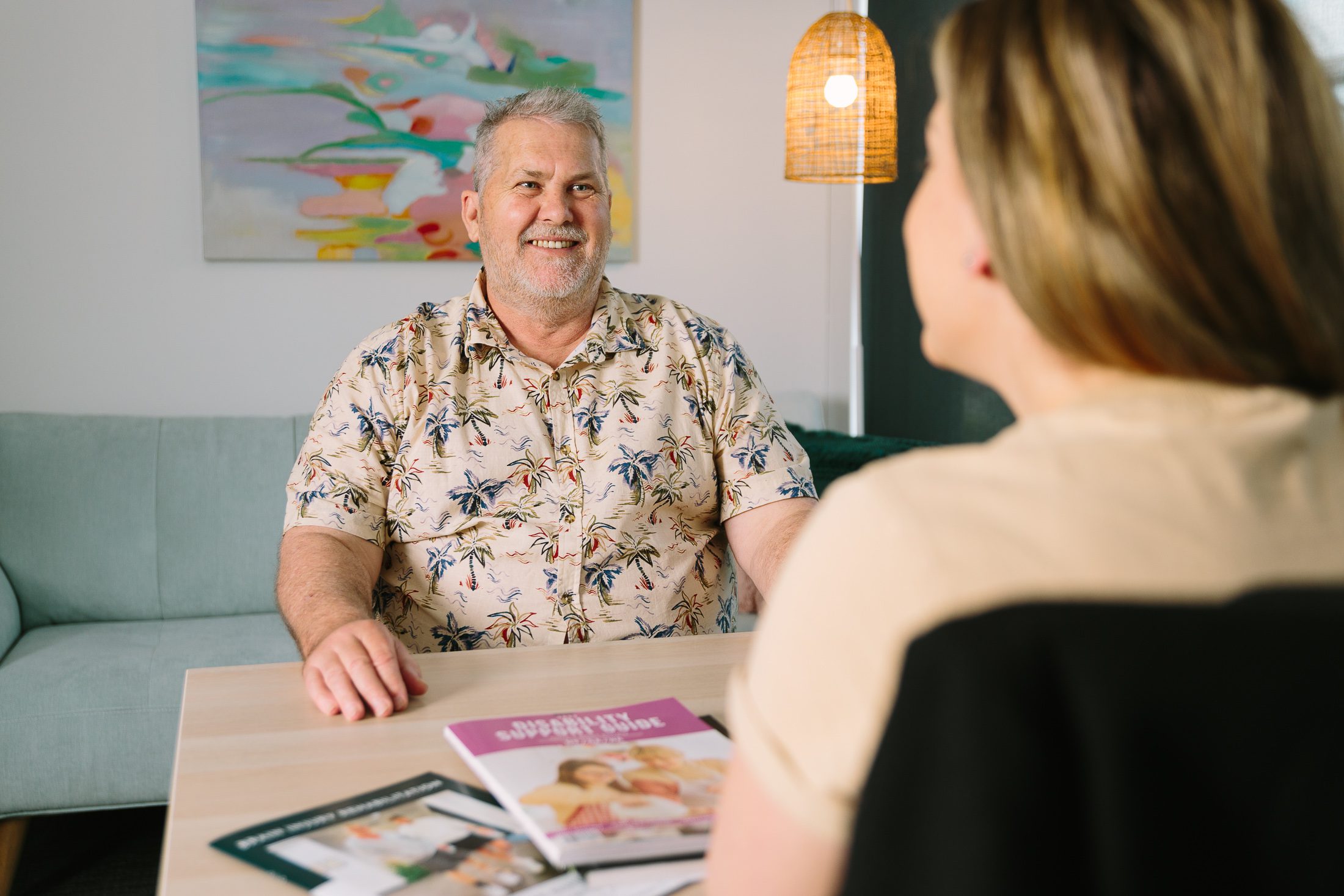
At ONE Rehabilitation Service, we provide comprehensive, evidence-based allied health care for people living with Huntington's Disease.
Huntington’s Disease is a complex, progressive neurological condition that affects movement, cognition, and mood. Managing it well requires a team that understands how these challenges intersect and can adapt as needs change over time.
Located in Ashford, Adelaide, our clinic brings together Physiotherapy, Exercise Physiology, Occupational Therapy, Speech Pathology, Psychology, and Social Work under ONE roof. Our clinicians work collaboratively around a shared clinical picture of each client, so nothing falls through the gaps.
We offer services in clinic, in the home, in community settings, and through telehealth providing accessible, personalised care wherever you are on your HD journey.
Common Symptoms of Huntington's Disease
Involuntary Movements (Chorea)
Uncontrolled, jerky movements of the limbs, face, and body that can affect walking, balance, and daily tasks.
Muscle Rigidity & Slowness
As HD progresses, movements often become slower and stiffer, making physical tasks increasingly difficult.
Balance & Falls Risk
Difficulties with coordination and gait increase the risk of falls and limit independence in everyday movement.
Speech & Swallowing Changes
Cognitive Changes
Difficulties with memory, concentration, planning, and problem-solving that can affect work, relationships, and daily life.
Mood & Psychiatric Symptoms
Depression, anxiety, irritability, apathy, and obsessive-compulsive behaviours are common and often appear early in the condition.
Fatigue
Managing the physical demands of involuntary movements and the emotional weight of HD can significantly deplete energy levels.
Weight Loss & Nutritional Challenges
Increased energy expenditure from chorea combined with swallowing difficulties can make maintaining a healthy weight challenging.
Impact on Family & Carers
HD has a significant genetic component, which means the diagnosis affects not only the individual but the whole family; practically and emotionally.
How Allied Health Treatment Can Help
At ONE Rehabilitation Service, our entire team is focused exclusively on neurological rehabilitation. For people living with Huntington’s Disease, that depth of focus makes a real difference; each discipline contributes to a coherent, coordinated plan built around your goals.
Physiotherapy
Supports mobility, balance, posture, and strength. Your physiotherapist will work with you to manage the effects of chorea, reduce falls risk, and maintain your ability to move as independently as possible at every stage.
Exercise Physiology
Provides structured, safe exercise programming to build and maintain cardiovascular fitness, muscle strength, and endurance. Exercise has growing evidence for supporting fitness, mobility, physical function, and quality of life in people living with HD.
Occupational Therapy
Helps you stay independent in the activities that matter most; self-care, home management, work, and leisure. Your OT can also assess and recommend assistive technology, home modifications, and strategies for managing fatigue and cognitive changes day to day.
Speech Pathology
Addresses changes in voice, speech clarity, and swallowing. Early intervention can help maintain safer swallowing and clearer communication for longer, and your speech pathologist can support you and your family with strategies as needs evolve.
Psychology
Supports the significant emotional and psychological challenges that accompany HD including depression, anxiety, adjustment, grief, and the complex experience of living with a hereditary, progressive condition. Support is available for clients and family members alike.
Social Work
Provides practical guidance and emotional support around navigating the health and disability system, planning for the future, supporting carers, and connecting with community resources. Your social worker is a key advocate and coordinator in your care team.
Our difference
Why Choose ONE Rehabilitation Service?
Unlike generalist clinics, ONE Rehabilitation Service is exclusively focused on neurological care. Our team has deep, dedicated experience with the complex, progressive needs of clients living with HD. We understand that HD evolves and so does the support you need. We’re here for the whole journey.
Outcome-Centred
Neurological Focus
Interdisciplinary
Your whole team works from a shared clinical picture. That means better coordination, less repetition for you, and greater impact across every area of your care.
One-Point Referral
Impactful Support
Compassionate Clinicians
Our team brings patience, empathy, and genuine understanding of the unique challenges that come with living with a progressive neurological condition like HD.
Start Your Huntington's Disease Rehabilitation Journey Today
Our team is ready to support you and your family at every stage. Reach out today to book your free introductory session and find out how ONE Rehabilitation Service can help.
Fees and Funders

Services Australia Care Plans
Medicare Chronic Disease Management Plans (CDM), Mental Health Care Plans (MHCP), and Team Care Arrangements (TCA)

Private Healthcare
Please contact your private health fund to see what rebate you are eligible for.


Full fee paying (16+)
You are able to access our services by paying the full rate (out of pocket). Phone (08) 7226 3223 for details on fees and to book your initial assessment.
Eligibility:
- 16 and over.
Return to work SA (RTWSA)
For further details, visit the Return to Work SA website.
For more information about ADF Bupa visit their website.
Eligibility:
- Sustained an injury at work during paid employment.
- Australian citizen.
Lifetime Support Authority
For further details on eligibility and to access the application form please visit the LSA website.
Eligibility:
- Sustained very serious injury in a motor vehicle accident, regardless of fault, from July 2014 onwards.

NDIS
We can accept NDIS participants who are self-managed or plan-managed. For more information visit the NDIS website.
Eligibility:
- Permanent disability
- Australian citizen
How to work with us
We offer a streamlined referral process to make your path to care as simple as possible.
Step 1
Get a referral or book in
Be referred by your GP, specialist, or support coordinator — or simply book your own free introductory session.
Step 2
Meet our Referrals Coordinator
Have a sit-down conversation to explore your goals, discuss what we offer, and find out how our team can support you.
Step 3
Begin with your personalised team
Work with clinicians across the disciplines you need, all collaborating around ONE shared plan — yours.